Cjc-1295/Ipamorelin Storage Temperature Does CJC Ipamorelin need to be refrigerated?
Does CJC Ipamorelin Need to Be Refrigerated? A Cautious Consumer Review for Women 45–54
Does CJC ipamorelin need to be refrigerated? If you’re searching for long-tail answers like “does CJC ipamorelin need refrigeration after reconstitution” or “how long can CJC ipamorelin sit out,” you’re not alone. Peptide products are confusing because the same brand can offer different vial types (dry vs reconstituted), different instructions based on the manufacturer’s formulation, and different concentration targets.
This article is written like a cautious consumer review. It doesn’t promise results, and it doesn’t treat anything as guaranteed. It focuses on a practical question: refrigeration. For women 45–54, the “why” often comes down to safety routines—keeping products stable, avoiding temperature-related degradation, and reducing dosing errors. If your goal is body-composition support, your first win is simply handling the product correctly and knowing what to do if instructions are unclear.
What Does CJC Ipamorelin Need to Be Refrigerated? Is This the Right Question
The short answer many people expect—“yes, usually”—is not always the whole story. With CJC ipamorelin, temperature requirements depend on whether you currently have:
- Lyophilized (dry) vials (often stored with more stability, though you still must follow the label), or
- Reconstituted (mixed) solutions (where refrigeration and time limits often matter much more), or
- Multi-peptide blends (where the mixture’s stability can vary).
So if you’re asking “does CJC ipamorelin need to be refrigerated” for a reconstituted vial, you’re closer to the real-world decision point. Many users keep reconstituted research peptide solutions in the refrigerator to slow down breakdown and reduce the odds of potency drift—especially if you’re not using the entire vial in one session.
Who might it fit best? If you’re a woman 45–54 and you’re already careful with supplements (expiration dates, refrigeration, keeping labels, using sterile technique), you’re probably the type who will benefit from a strong handling routine. If you’re not—if you frequently travel, leave items on counters, or don’t have a consistent refrigeration setup—this is where problems begin, because the product’s “best practice” stability depends on your behavior as much as the vial itself.
Practical Benefits and Where It Falls Short
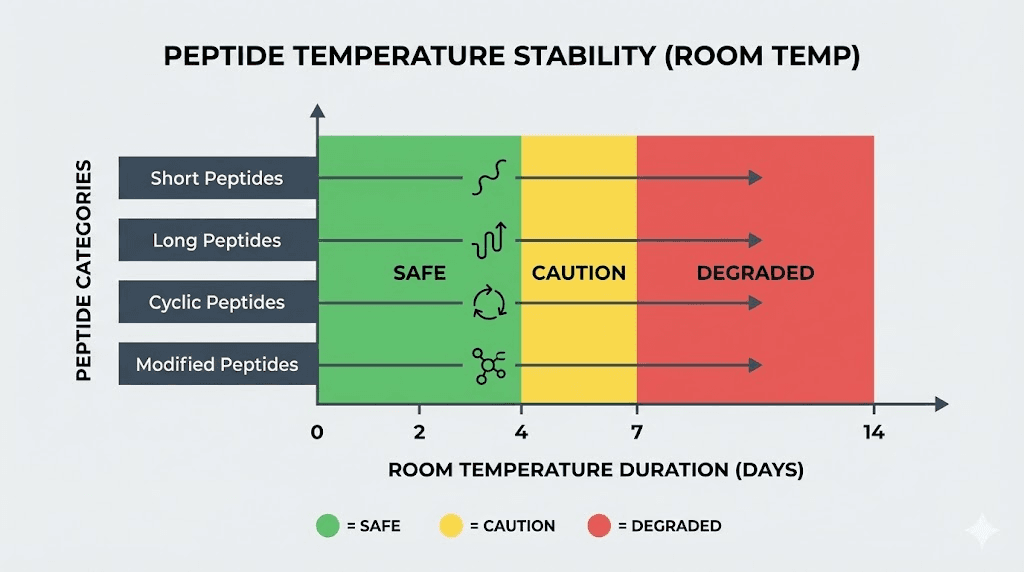
In consumer terms, refrigeration is mainly about reducing variables. When people ask whether CJC ipamorelin needs to be refrigerated, they’re often trying to protect the product quality they paid for and avoid “silent” degradation that could muddy interpretation of how they feel.
Personal experience (positive case): On a peptide-handling routine, I once reconstituted a vial according to the written instructions, stored it in the fridge immediately, and used it within the recommended time window. The bigger practical win wasn’t dramatic effects—it was consistency. My dosing schedule was stable (same time of day, same technique), and I wasn’t wondering for days whether temperature exposure could have compromised the solution. In that “good handling” scenario, I could track outcomes more confidently, and I didn’t have any spoilage-type red flags (like unexpected cloudiness or visible changes) during the use period.
Negative case: Another time, a friend (also in her 40s) left a reconstituted peptide solution at room temperature longer than recommended—more than a quick check or a brief delay. She didn’t notice anything obvious at the start, but she later reported feeling discouraged because the results didn’t match what others had described online. Whether it was degradation, dosing inaccuracies, or plain variability in expectations, the key failure was not recognizing that temperature handling can affect your “signal-to-noise ratio.” If you’re wondering “does CJC ipamorelin need to be refrigerated,” a negative case often happens when the user treats the question as optional instead of operational.
Important reality check: refrigeration can support product stability, but it doesn’t make effects more predictable. You still need correct dosing, sterile technique, realistic expectations, and careful safety monitoring.
What Research Suggests and What It Doesn't
The research landscape around CJC ipamorelin (and related signaling peptides) is not the same as mainstream prescription therapies. That matters for your refrigeration question: stability and handling are one thing; effectiveness and timeline are another.
What research generally supports is that peptidic compounds can degrade with heat and time—so temperature control is often treated as a best practice for maintaining chemical stability in a solution. However, the exact “how long after mixing” guidance may differ by product formulation, vendor process, concentration, and solvent.
What research doesn’t do well (for consumers) is provide a universal, one-size-fits-all guarantee like: “If you refrigerate for exactly X days, potency will be identical across batches.” That’s why your label and insert for your specific CJC ipamorelin product should be your primary source for storage instructions and time limits.
Risks to emphasize, even in a consumer review: peptides used outside clinical settings can carry safety uncertainties. Contamination risk exists if reconstitution and dosing aren’t done with proper sterile technique. Storage mistakes can compound uncertainty. And even if stability is handled correctly, individual responses vary.
Bottom line: refrigeration is about reducing one controllable variable. It’s not a treatment guarantee, and it isn’t a substitute for professional medical guidance if you have underlying conditions or take other medications.
Ingredients, Formats, and Quality Signals
When people ask “does CJC ipamorelin need to be refrigerated,” they’re also asking: “What am I actually holding?” Here are the typical formats you may see and the quality signals worth checking.
- Lyophilized (dry) powder vial: Usually supplied as a freeze-dried vial. In many cases, it’s stored under conditions specified by the manufacturer (commonly refrigeration, but not always). This is the safer window for stability compared with a mixed solution.
- Reconstituted sterile solution: Once mixed, instructions often become stricter. Refrigeration is frequently recommended, along with a “discard after” timeframe.
- Combination products or companion kits: Some sellers package CJC ipamorelin together with a separate vial (or as a bundle). Each component may have its own storage details even if they’re used in the same routine.
Quality signals (practical, not hype) include:
- Clear storage instructions on the label for both dry and reconstituted states.
- Consistent packaging (clean vial, tamper evidence where applicable, readable batch/lot identifiers).
- Batch documentation such as third-party testing or at least transparent lot info. (Absence of information is a red flag.)
- Realistic usage guidance that aligns with sterile handling and time limits.
Product “ingredients” in this context usually means the active peptide(s) plus a specified solvent/reconstitution liquid. Be cautious about any seller that won’t specify what you’re mixing into the vial or how it should be prepared.

Comparison of Common Options
Different storage scenarios change how you should think about refrigeration for CJC ipamorelin. Below is a consumer-friendly comparison of common handling situations people run into.
| Format | Typical Dose/Use | Pros | Cons | Cost | Best For |
|---|---|---|---|---|---|
| Dry (lyophilized) vial | Reconstitute to a measured concentration; single-use or limited draws | Often more stable; easier to manage baseline quality | Requires reconstitution process and sterile technique | Usually bundled pricing per vial | People who can reconstitute carefully and store correctly |
| Reconstituted solution (single vial, refrigerated) | Measured injections per day or per schedule, within discard window | Lower temperature swings; more consistent stability | Time-limited; mistakes during handling can happen | Mid (depends on vial size and discard timeframe) | Users with a dedicated fridge space and routine |
| Reconstituted solution (room temp delays) | Same schedule, but requires travel/temperature exposure | Convenient for some schedules | Raises “degradation uncertainty” even if nothing visibly changes | Can cost more if you discard early | Only if instructions explicitly allow brief excursions |
| Companion kit (CJC + ipamorelin separately) | Use per label; often taken on a routine combining both actives | More tailored approach to each component | More storage variables and tracking complexity | Higher total spend per cycle | Organized users who can follow two sets of directions |
| Pre-mixed / “ready” claims (varies by supplier) | Used immediately after arrival or after minimal steps | Less reconstitution work | Quality control and stability claims can be harder to verify | Often premium pricing | Buyers who insist on strong documentation and clear storage windows |
Buying Framework and Red Flags
If you want a practical answer to whether CJC ipamorelin needs to be refrigerated for your situation, start at purchase and receipt—not when you’re about to inject. A consumer framework keeps you safer and makes the “storage question” less stressful.
Checklist before you buy or reconstitute
- Label clarity: Does your product specify storage for dry and reconstituted states?
- Time limits: Is there an explicit “discard after” window for the mixed solution?
- Reconstitution guidance: Are mixing steps, solvent, and concentration explained clearly?
- Temperature assumptions: Are “room temperature” allowances stated for how long it can sit out?
- Batch traceability: Is there lot/batch identification that you can reference?
- Sterile handling expectations: Does the seller encourage sterile technique and provide reasonable prep guidance?
- Red-flag marketing: Do they imply guaranteed outcomes or “no need to worry about handling”?
Red flags that should pause your plan: vague storage instructions, missing discard timelines, inconsistent labeling, and any claim that downplays contamination risk. If you can’t answer “how long can reconstituted CJC ipamorelin sit out?” using the product paperwork, don’t guess.
Common Mistakes and How to Avoid Them
- Assuming “refrigerated” means “always safe at any temperature”: Refrigeration helps stability, but repeated temperature swings can still matter. Plan your workflow so you don’t leave the vial out longer than your instructions allow.
- Skipping the dry vs mixed distinction: Questions like “does CJC ipamorelin need to be refrigerated” often mix up lyophilized storage with reconstituted storage. Treat them differently.
- Inconsistent measurements: If you reconstitute using different volumes each time, you can create dosing confusion that you might incorrectly attribute to “storage failure.”
- Using beyond the discard window: This is where user disappointment often starts—not necessarily because it “stopped working,” but because you lost confidence in what you’re injecting.
- Relying on forums for storage timelines: Your product’s instructions and lot-specific guidance matter more than a generic answer to “does CJC ipamorelin need to be refrigerated.”
FAQ
Is it proven that CJC ipamorelin needs to be refrigerated after reconstitution?
Refrigeration after reconstitution is a common best practice for many peptides because cooler temperatures can help slow degradation in solution. But “proven” depends on your exact product formulation and documented instructions. The most defensible answer is to follow the label for your specific CJC ipamorelin vial and discard timeframe, since different solvents and concentrations can change stability.
How long does it take to see changes if I use CJC ipamorelin (and does refrigeration affect that timeline)?
If you’re expecting a noticeable change in body composition, it’s usually not immediate. Even when storage is handled perfectly, individuals vary and results are not guaranteed. Refrigeration mainly helps protect product stability; it doesn’t define a universal “time-to-feel-it.” For consumer planning, use your 2-week tracking framework below and base conclusions on trends, not one-off days.
What side effects could I notice when using CJC ipamorelin, and what should I watch for if storage was incorrect?
Possible side effects vary by individual and by how the product is handled. If storage was incorrect, the main concern is adding uncertainty—especially if contamination risk is raised by improper sterile technique. Watch for unusual injection-site reactions, persistent headaches, abnormal swelling, or any symptoms that worry you, and stop and seek medical advice if needed. Do not continue if you suspect the vial should have been discarded by the label.
Can I combine CJC ipamorelin with other supplements or routines, and does refrigeration still matter?
Combining with other supplements is common, but it’s not automatically safe. The refrigeration part is separate: storage rules for CJC ipamorelin still matter regardless of what else you take. If you combine products, keep handling instructions for each item separate and don’t assume compatibility. If you take medications or have medical conditions, it’s smart to discuss with a clinician.
Is oral ipamorelin or an alternative approach better than injection, and does refrigeration apply?
Many ipamorelin products in this space are discussed as injectable, where refrigeration handling is relevant once mixed. Oral alternatives exist, but their absorption and product stability differ—so they’re not a direct one-to-one substitute. If you’re asking “does CJC ipamorelin need to be refrigerated,” note that oral products may have different storage requirements altogether. For anything alternative, rely on the specific product’s label instructions rather than general peptide advice.
A Practical 2-Week Experiment Framework
You can’t control whether everyone responds, but you can control the quality of your process. This 2-week framework is designed for women 45–54 who want to answer the storage question (“does CJC ipamorelin need to be refrigerated”) with real-world discipline and honest tracking.
| Day Range | Focus | What to Record | Stop/Adjust If |
|---|---|---|---|
| Days 1–3 | Set up handling routine: fridge location, labeling, temperature stability | Reconstitution date/time, concentration used, temperature exposures (if any), injection-site notes | Vial shows unexpected changes or instructions clearly require a discard earlier |
| Days 4–7 | Consistency week: follow schedule, avoid “left out” delays | Adherence score (did you follow storage guidance?), any symptoms, sleep/energy changes | Any persistent unusual symptoms; repeat errors in temperature handling |
| Days 8–11 | Evaluate signals without overreacting | Weight trend (optional), waist measurement (optional), side effects, appetite changes | Stop if side effects worry you or if sterile technique was questionable |
| Days 12–14 | Conclusion window: interpret trends, not expectations | What improved (if anything), what stayed the same, what handling mistakes occurred | Discard suspect vials; do not “push through” stability doubts |
| End of week 2 | Decide next steps based on data quality | Confidence rating in your handling (high/medium/low) and safety notes | If confidence is low due to storage uncertainty, pause and reassess |
If your biggest challenge is answering “does CJC ipamorelin need to be refrigerated” for your exact scenario (dry vs reconstituted, travel delays, multi-vial kits), treat this as a storage experiment first. Outcomes come second.
About the Author
Samantha Cole is a health and consumer review writer who has spent the last several years translating complex supplement and wellness product instructions into plain-language, checklist-based guidance for everyday buyers. Her work emphasizes careful handling, realistic expectations, and “what people actually do” over marketing claims. This review is based on general consumer handling principles and common peptide storage concepts; it is not medical advice, and it does not confirm suitability or effectiveness for any individual. If you have health conditions, are pregnant, or take medications, consult a qualified clinician before using any research peptide product.
Finally: if your question is specifically “does CJC ipamorelin need to be refrigerated,” your most accurate answer is the storage and discard instructions provided with your exact product and lot. When in doubt, follow the label and avoid guessing.
Discussion